I spent four weeks based in the ophthalmology department at Jikei University Hospital in central Tokyo. I gained exposure to different subspecialties during my time split between the outpatient clinic, the neonatal ICU, and the operating theatres.
With quite limited exposure to Ophthalmology in medical school (most universities have one or two weeks within this speciality), it was useful to see the difference in demographics and observe rare cases, which included ocular involvement in Behcet’s disease, Takayasu arteritis, and epidermolysis bullosa. I really enjoyed spending time in the neonatal ICU, as this was something I hadn't had a chance to do previously, and I got to join the ward rounds and get involved in the staging and screening for retinopathy of prematurity.
The culture shock
Despite a huge language and cultural barrier, the team were incredibly welcoming and taught me a lot of Japanese traditions and customs. There was a strong culture of seniors looking after juniors, and many days I was taken out for lunch with the ophthalmology doctors and other students in the department. This became a dedicated time of day for debriefing surgical cases and discussing techniques. Although I couldn’t converse in Japanese, I was taught some handy phrases to help me during my elective, and we had wider discussions about the medical system in Japan vs. in the UK.
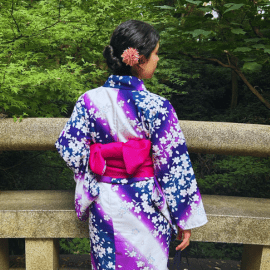
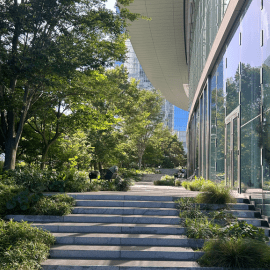
One thing I loved about Tokyo was the contrast between cutting-edge technology and ancient tradition and customs, and stunning greenery. One major highlight of my time in Jikei was when the doctors took me along with them to visit some of the shrines tucked between the skyscrapers of central Tokyo. Atago Jinja is a shrine close to the hospital, and we climbed the eighty-six “stairs of success” (in the sweltering, humid heat of 35 degrees Celsius) to get to this shrine. This shrine dates to the Edo period, and the tale is that – despite all odds – a young samurai rode up this slope on horseback to deliver plum blossoms to the shogun. Climbing the stairs without stopping is humbling, highlighting that for success and achievement, effort and perseverance are also needed. This small amount of time to reflect, appreciate, and have a moment of mindfulness in a massive, bustling city that works and moves non-stop was, to me, a beautiful aspect of daily working life in Japan, and it also altered my outlook on how we manage our work-life balance as medical professionals in the UK.
Advanced technology
Innovative technologies are at the forefront of medical care in Japan. Cataract surgery is an essential skill for all new trainees. Therefore, when observing cataract removal and lens insertion, it was incredibly entertaining to watch with special 3D glasses in the operating room, visualising the steps whilst watching on screen. I also had the opportunity to observe novel technologies, such as laser cataract removal and visual field screening tools.
Most patients have their care subsidised by the government, so despite having to pay for private secondary care, the cost was relatively affordable, with one professor noting at the time that a CT scan costs only 1000 yen per patient (less than £5).
Educational opportunities
The opportunity to undertake this elective was through an exchange programme between partner universities, with three students also undertaking an elective programme in the UK from Japan. Meeting with them and forming friendships was a special part of the elective, and we were able to exchange ideas about Japan and the UK and share advice as professional colleagues. Within Jikei, there was also an International Café held regularly, where we could present something weekly and listen to presentations by other students taking an elective at the same University. It was amazing to experience being another student at a different University in a country far from home, and to share ideas and experiences. The teachers and professors running the café often had fond memories of international travel, including visits to the UK, so this intercultural exchange was something they were extremely passionate about passing down to the next generation of future doctors.
Exploring Japan
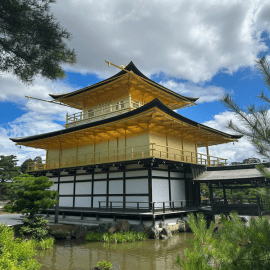
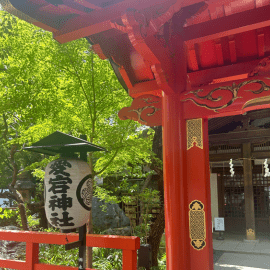
I spent some time in Japan before and after my 4-week placement for lots of sightseeing and adventures outside of my clinical commitments. I went on trips to Kyoto, Hiroshima, Osaka, Nagoya and Nikko, getting to experience the jaw dropping cultural landmarks scattered around Japan but also gaining a deeper understanding of the modern art, fashion, popular culture, ancient history and cuisine that make this destination truly unique. I was lucky to experience the summer “matsuri” season, Japan's festival season, with regular dance festivals, street music, and firework festivals such as the Sumida River Fireworks Festival, where I was one of 1 million people who attended to see fireworks lit from multiple bridges across the city.
Take-home messages
To any students who may currently be considering an elective abroad – I would encourage you to 100% do it! It can seem stressful to organise and daunting to undertake, especially whilst you’re working towards exams and haven’t worked overseas for a long time before. However, it was a well-deserved break from study in the UK, and the experiences I had in Japan shaped me as a person, both in how I interact with others and build rapport with people who might not speak the same language, and in how to manage a work-life balance outside the demands of medicine.
This page was correct at publication on 03/02/2026. Any guidance is intended as general guidance for members only. If you are a member and need specific advice relating to your own circumstances, please contact one of our advisers.
by Lily Rouhi-Parkouhi
Lily studied at the University of Leeds before starting her foundation training in Manchester. She is interested in anaesthetics and ophthalmology. With a passion for medical education, she hopes to continue to teach students and create educational resources throughout her career. In her free time outside the hospital, she is an avid reader, enjoys yoga and loves to travel to new places.